With an RTI Application: How a Polluting RMC Plant Faced Closure Action
TGPCB orders closure of Surya Infra RMC at Chitrapuri Colony after complaint, inspection and RTI follow-up
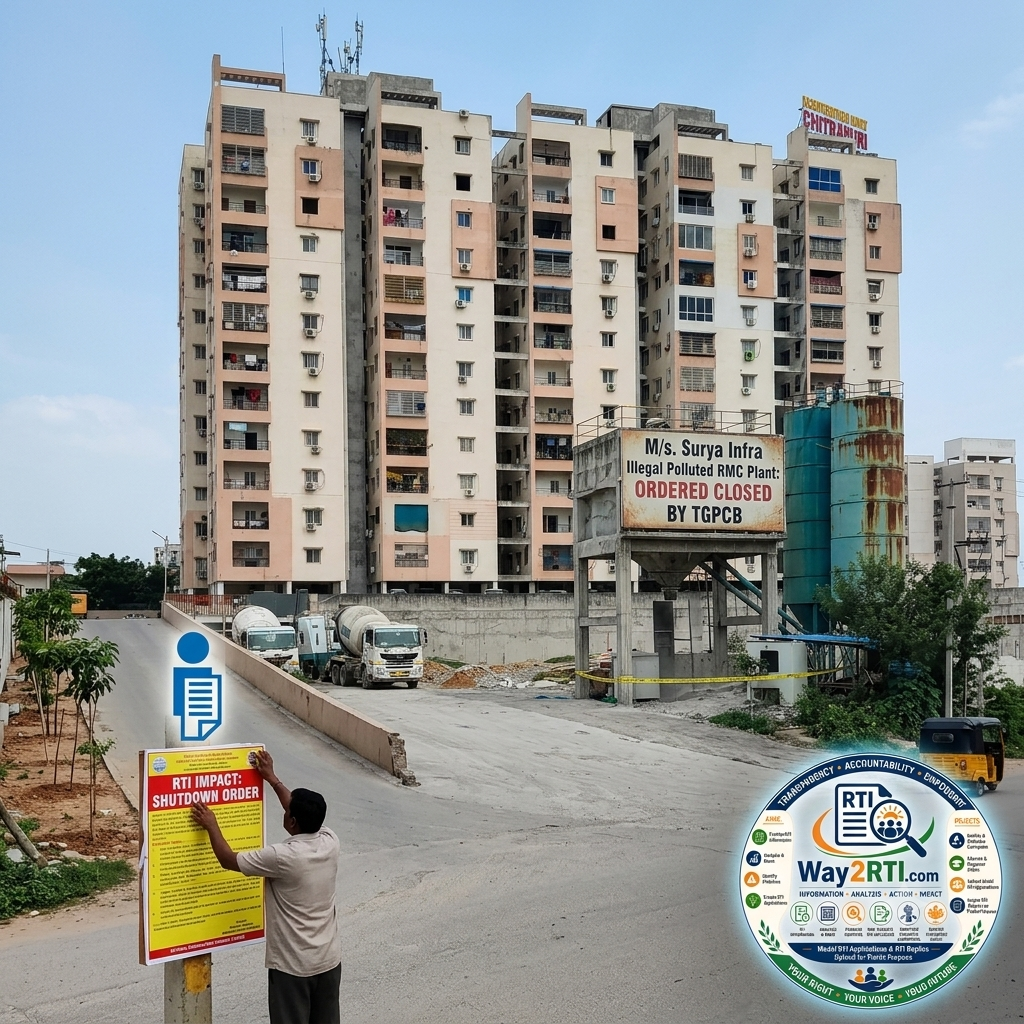
Hyderabad/Ranga Reddy: A complaint regarding the operation of a Ready-Mix Concrete (RMC) plant at Chitrapuri Colony, Manikonda Village, Gandipet Mandal, Ranga Reddy District, has resulted in closure action by the Telangana Pollution Control Board (TGPCB).
The case concerns M/s Surya Infra RMC, which, according to the TGPCB closure order, was operating without obtaining the required pollution-control consents.
Complaint followed by inspection
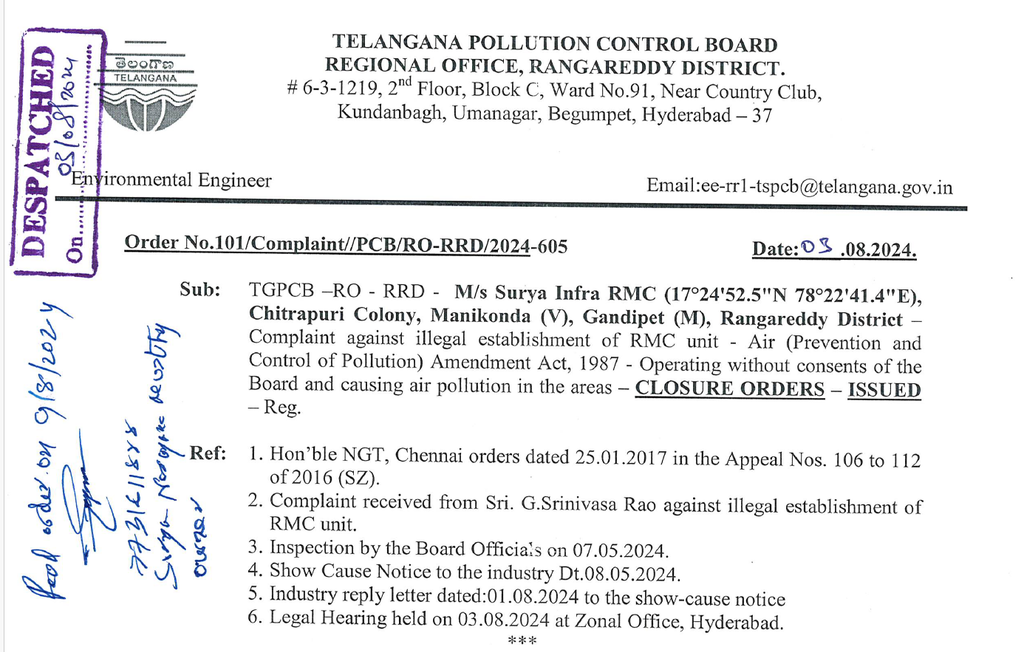
The TGPCB order, Order No.101/Complaint/PCB/RO-RRD/2024-605 dated 07.08.2024, records that a complaint was received from G. Srinivasa Rao against the alleged illegal establishment of the RMC unit. The Board subsequently inspected the industry on 07.05.2024.
The inspection identified several deficiencies, including operation without Consent for Establishment/Consent for Operation (CFE/CFO), inadequate dust-control measures, absence of closed sheds for raw-material storage and inadequate water-sprinkling arrangements.
The Board also observed dust emissions from the raw-material storage area and internal roads and noted the absence of wind-breaking walls along the unit boundaries.
RTI helped track action taken
Following the complaint, an RTI application under the Right to Information Act, 2005 was used to seek the Action Taken Report and related records concerning the complaint.
This demonstrates an important public-interest use of the RTI Act: a citizen can use RTI not only to obtain information but also to track whether a government authority has acted on a complaint.
The records in this case show a sequence of complaint → inspection → show-cause notice → hearing → closure order.
TGPCB cited proximity to lakes and residential apartments
The closure order states that the RMC unit was operating within a 10-km radius of Himayatsagar and Osmansagar lakes and referred to restrictions under G.O.Ms.No.111, M.A., dated 08.03.1996.
The Board also recorded that the plant was located approximately 35 metres from residential apartments and that adequate pollution-control measures had not been taken.
Among the deficiencies recorded by the Board were:
- No CFE/CFO from the Pollution Control Board
- No adequate cladding for mixer and conveyor belts to control dust
- No closed sheds with sprinkler systems for raw materials
- No water meters or records for water sprinkling
- No wind-breaking walls along the boundaries
- No fixed sprinklers on the premises
Closure order issued
After considering the inspection findings, the industry’s reply and the recommendation of the Task Force Committee, the TGPCB issued closure orders against the unit in the interest of public health and the environment.
The order further directed the power-distribution authorities to disconnect the power supply with immediate effect. It warned that continued operation even after the closure order could lead to prosecution under the Air (Prevention and Control of Pollution) Act.
What citizens can learn from this case
This case offers a practical RTI model for residents facing pollution or unauthorised industrial activity:
1. Identify the problem
Document the location, nature of the activity and possible public/environmental impact.
2. Complain to the competent authority
Submit a written complaint to the Pollution Control Board or other responsible department and preserve the acknowledgement.
3. File an RTI application
Ask for specific information such as:
- Action Taken Report on the complaint
- Inspection report
- Notices issued
- Replies received from the industry
- Consent/CFE/CFO details
- Orders passed
- Present status of the complaint
4. Follow up with RTI information
If the records reveal violations or inaction, use the information for further representation, appeal or other lawful remedies.
Way2RTI message
RTI is not merely a tool for asking questions. It can also be a powerful mechanism for monitoring government action.
The Surya Infra RMC case shows how a citizen complaint, followed by an RTI seeking records of action taken, can help bring transparency to enforcement proceedings.
One complaint. One RTI. One follow-up. Government records revealed the action taken.
Way2RTI.com encourages citizens to use the RTI Act, 2005 responsibly to promote transparency, accountability, environmental protection and public interest.
Note: Are you interested in filing an RTI application on the above issue? Interested citizens may send their details to our official email: gsrao@way2rti.com