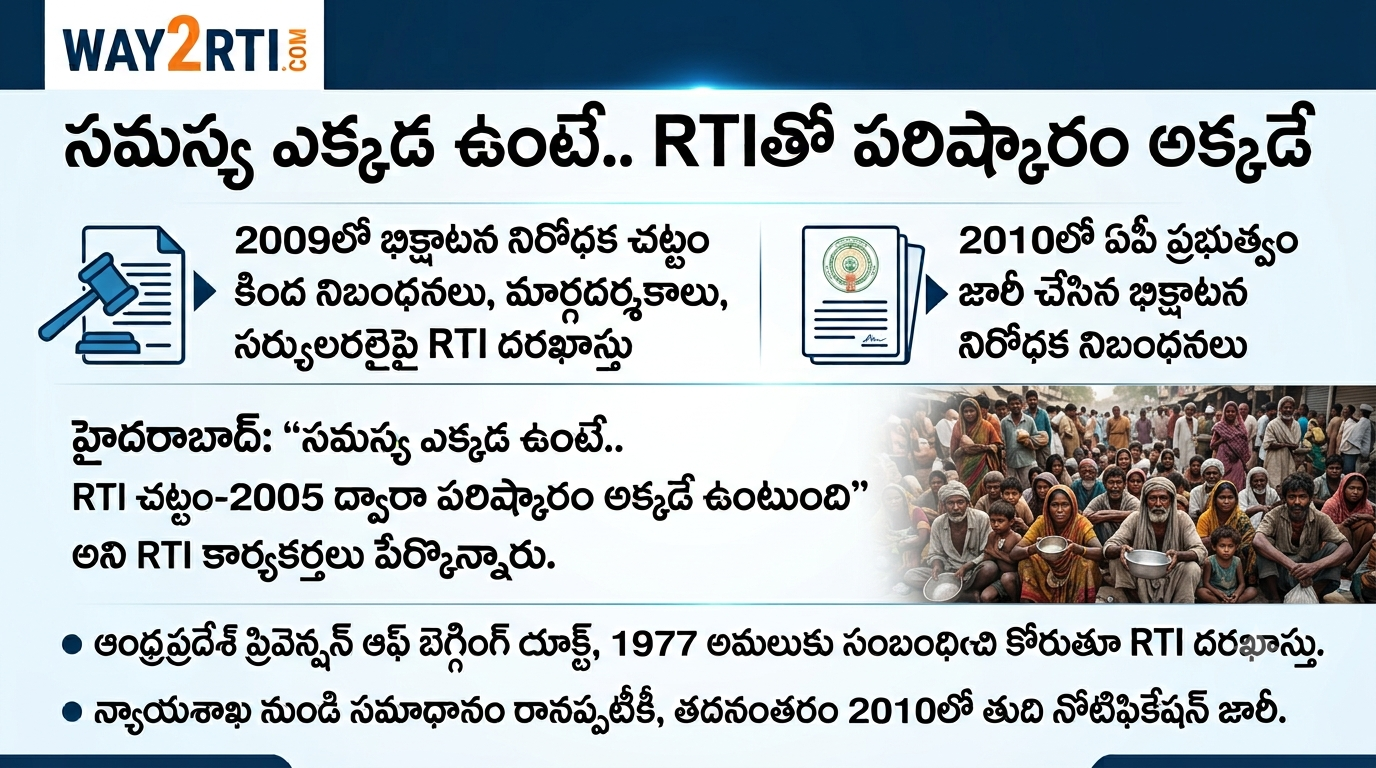
Where There Is a Problem, RTI Can Find a Solution: How an RTI Application Preceded Begging Rules Notification
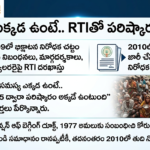
A 2009 RTI application seeking rules under the AP Prevention of Begging Act, 1977 was followed by the State Government issuing the AP Prevention of Begging Rules, 2010
Hyderabad: “Where there is a problem, there is a solution using the Right to Information Act, 2005.”
This is the confidence expressed by RTI activist and social activist Ganji Srinivasa Rao, recalling an RTI application filed by him in 2009 concerning the implementation of the Andhra Pradesh Prevention of Begging Act, 1977.
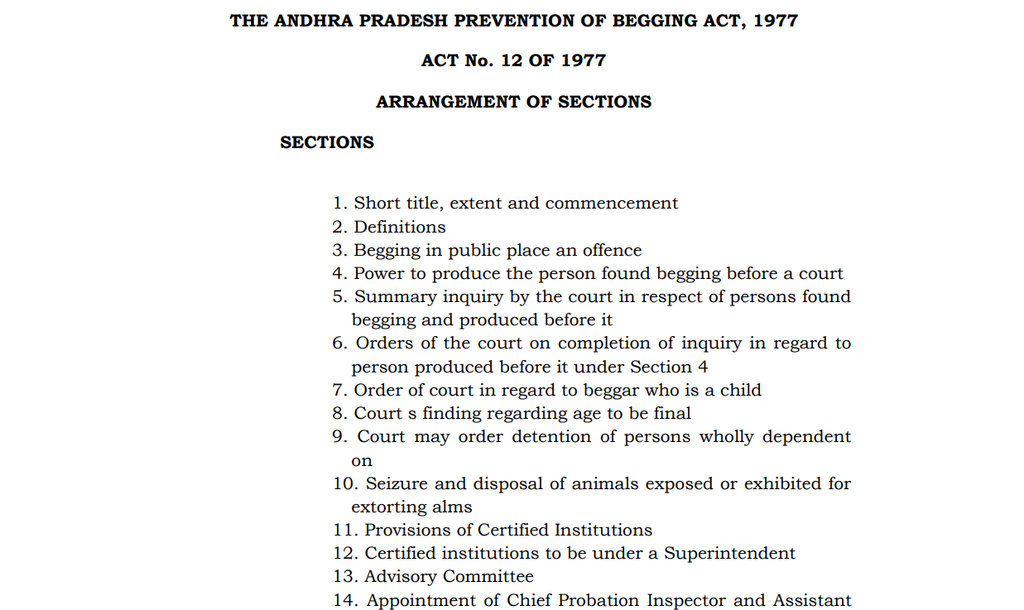
Rao had filed an RTI application before the Law Secretary, Government of Andhra Pradesh, Hyderabad, seeking information relating to the rules, regulations, guidelines and circulars issued under the Act.
According to Rao, the Law Secretary Do Hijras fall under the category of beggars?did not furnish a reply to his RTI application.
Rules subsequently notified in 2010
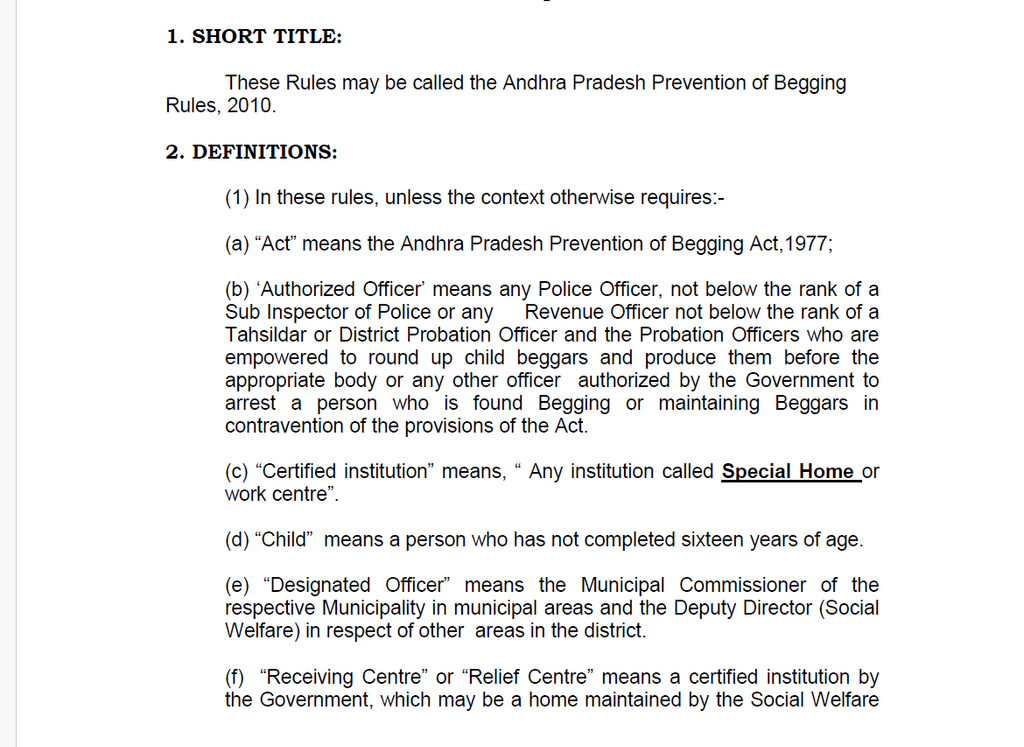
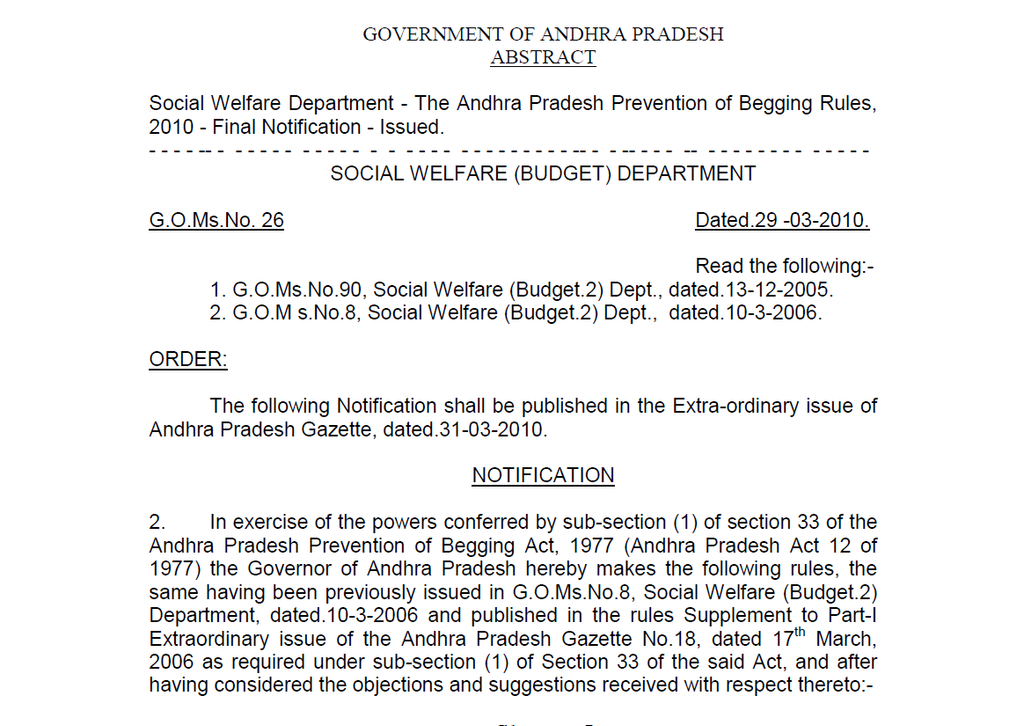
The Government record shows that the Andhra Pradesh Prevention of Begging Rules, 2010 were finally notified through G.O.Ms.No.26, Social Welfare (Budget) Department, dated 29 March 2010.
The Government Order states that the Rules were made under Section 33(1) of the Andhra Pradesh Prevention of Begging Act, 1977 (Andhra Pradesh Act 12 of 1977). It also records that the Rules had previously been issued through G.O.Ms.No.8, Social Welfare (Budget.2) Department, dated 10 March 2006, and published in the Andhra Pradesh Gazette on 17 March 2006, after which objections and suggestions were considered.
Responsible departments and authorities
The 2010 Rules place responsibilities across several departments and field-level authorities.
1. Social Welfare Department
The Social Welfare Department is the principal department identified in the Government Order. The Commissioner of Social Welfare, Deputy Directors of Social Welfare and Social Welfare officers have important responsibilities relating to implementation, rehabilitation, funding and functioning of institutions.
2. Home Department / Police Department
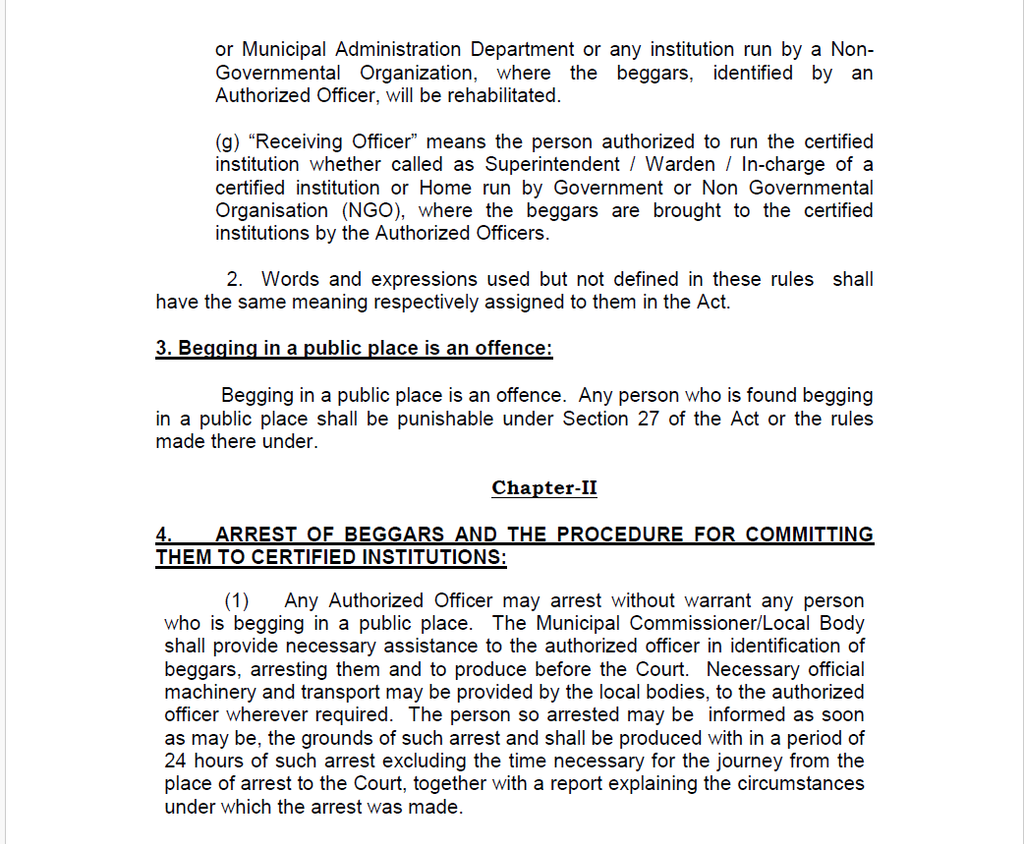
Police officers authorised under the Rules have enforcement responsibilities, including arresting persons found begging, producing them before Magistrates and arresting and prosecuting abettors.
3. Revenue Department
A Revenue Officer not below the rank of Tahsildar is identified as an authorised officer under the Rules. The Mandal Revenue Officer is also included in the Local Advisory Committee.
4. Municipal Administration / Local Bodies
Municipal Commissioners are given responsibilities in urban areas, including assistance in identification of beggars and implementation of preventive and rehabilitation measures. The Rules specifically identify the Municipal Commissioner as the Designated Officer in municipal areas.
5. Panchayat Raj / Rural Local Administration
At village level, the Rules provide for the Mandal Praja Parishad Development Officer, assisted by Village Secretaries, to participate in surveys for identifying beggars and areas where begging is prevalent.
6. Medical & Health Department
Medical officers are responsible for examining persons produced under the Rules and assessing their health and physical capacity. The State Committee also includes the Principal Secretary of the Medical & Health Department.
7. Women & Child Welfare Department
The District Advisory Committee includes the District Women and Child Welfare Officer, particularly relevant to children and street children affected by begging.
8. Finance Department
The Rules provide for Government funding for implementation of prevention and rehabilitation programmes. The Finance Department is also represented on the State Committee, and the Government Order records Finance Department concurrence.
9. District Administration
The District Collector and District Magistrate is designated as Chairman of the District Advisory Committee. The committee is responsible for coordinating surveys, identifying vulnerable areas and planning rehabilitation measures.
State-level monitoring
The Rules provide for a State Committee headed by the Chief Secretary, with senior officials from Home, Social Welfare, Panchayat Raj, Medical & Health, Municipal Administration & Urban Development, Women & Child Welfare and Finance departments.
The committee is required to review the progress of implementation of the Act once every six months.
RTI as a tool for accountability
For Ganji Srinivasa Rao, the episode demonstrates the importance of the RTI Act, 2005 in identifying gaps in governance.
“Where there is a problem, there is a solution using the RTI Act, 2005,” Rao says.
Although the available Government Order does not establish that his 2009 RTI application directly caused the 2010 Rules, the chronology is significant: an RTI query was raised regarding the availability of rules and related instructions, followed by the Government’s final notification of detailed Rules in March 2010.
The credit of RTI
The episode, according to Rao, demonstrates how citizens can use the RTI Act to question government departments about the existence of rules, guidelines, procedures and implementation mechanisms.
The 2010 Rules themselves created a multi-departmental framework involving Social Welfare, Police/Home, Revenue, Municipal Administration, Panchayat Raj, Medical & Health, Women & Child Welfare, Finance and District Administration.
For RTI activists, the message is simple:
Ask questions. Seek records. Identify the gap. Follow up.
Where there is a problem, there is a solution through the RTI Act, 2005.
Way2RTI.com — RTI for Accountability, Transparency and Solutions.
Note: Are you interested in filing an RTI application on the above issue? Interested citizens may send their details to our official email: gsrao@way2rti.com