Section 22-A Property Errors Leave Telangana Home Loans in Limbo: How Owners Can Seek Relief
Erroneous Prohibited-List Entries Can Block Sale, Registration and Bank Loans
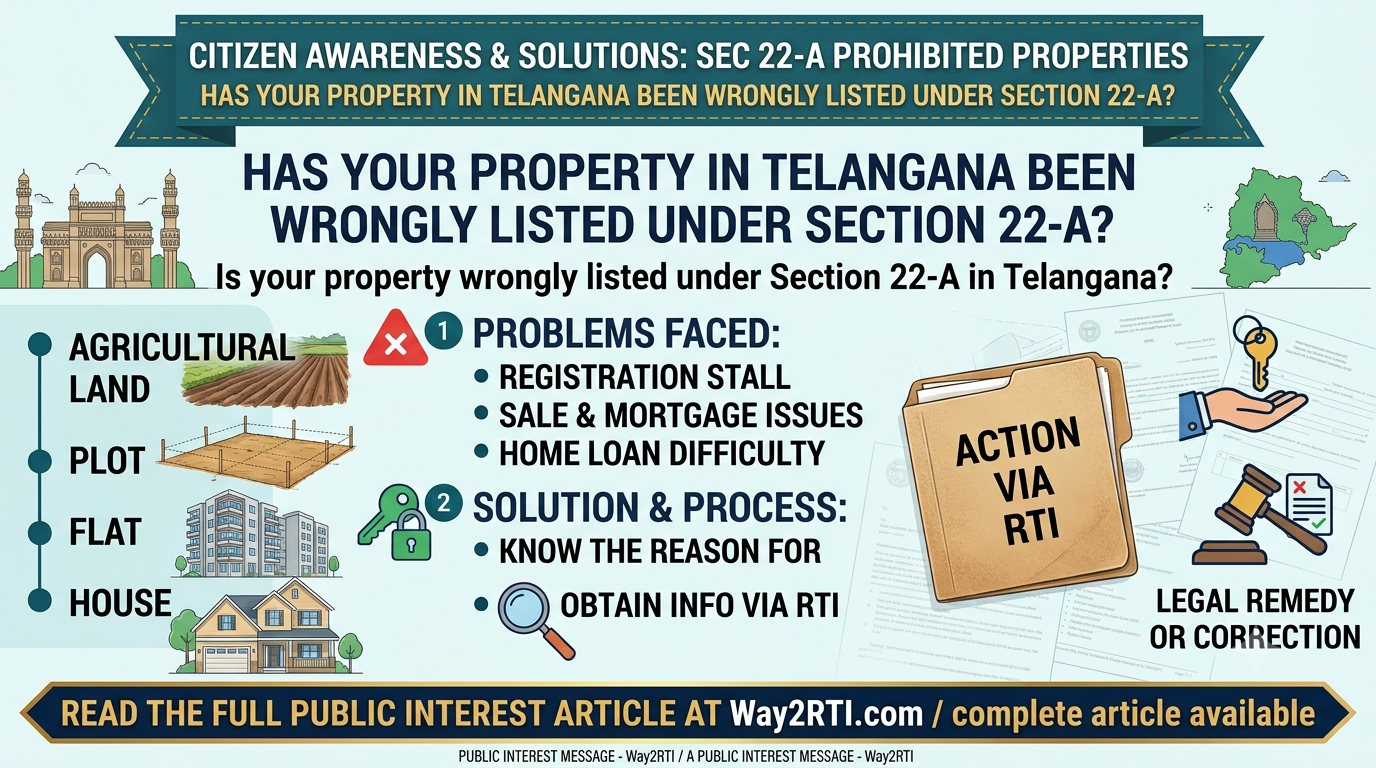
Errors in Telangana’s Section 22-A Prohibited Properties list are creating difficulties for property owners whose agricultural lands, plots, flats and houses have allegedly been wrongly classified as prohibited.
An erroneous Section 22-A entry can prevent registration of a sale or transfer and can also affect home loans, loans against property and mortgage transactions, as banks examine the legal status of property before accepting it as security.
What should an affected owner do?
1. Check the exact 22-A entry
First obtain the details of the prohibited entry, including the survey number, subdivision, village, mandal, district, extent, classification and reason/category of prohibition, wherever available. Keep a copy of the online record or written information.
2. Collect property documents
Prepare all available records establishing ownership and legal status, such as:
- Registered sale deeds and link documents
- Pattadar passbook/title deed
- ROR, pahani/adangal and mutation records
- Property-tax records
- Layout/building permissions, where applicable
- Relevant Government Orders and court orders
3. Submit a written correction request
Approach the competent Revenue authority with the documents and request verification and deletion/correction of the erroneous Section 22-A entry.
Always obtain an acknowledgement and retain a copy of the application.
4. Use RTI to find out why the property was prohibited
If the basis of the entry is unclear, file an RTI application seeking:
- Certified copy of the order/proceedings under which the property was included;
- File noting and correspondence;
- Records relied upon for the prohibition;
- Survey number, extent and classification considered;
- Designation of the officer responsible for the entry;
- Verification report, if any; and
- Procedure and time limit for deletion/correction.
If the information is held by another public authority, request transfer under Section 6(3) of the RTI Act, 2005.
5. If a bank loan is affected
Obtain written communication from the bank showing that the loan is pending because of the Section 22-A status. Attach it to the correction representation and request priority consideration where a genuine transaction or loan is pending.
The final decision on sanctioning a loan remains with the lender.
Do not rely on verbal answers
If an official says that the property cannot be removed, ask for the written order and legal basis. If the application is pending, obtain an acknowledgement and status. Written records are essential for further administrative, RTI or legal remedies.
Need for a time-bound mechanism
Property owners should not be forced to make repeated visits to different offices to correct an erroneous government database entry.
The Government should establish dedicated counters, online status tracking, time-bound disposal, reasoned orders and clear responsibility for correcting Section 22-A errors.
Public message
Check the entry → Collect documents → Seek written correction → Use RTI to obtain the records behind the entry.
RTI can help an affected owner turn the question “Why was my property placed under Section 22-A?” into a documented question of procedure, evidence and accountability.
This article is for public awareness. The appropriate authority and legal remedy may vary depending on the nature of the property and the reason for its inclusion in the prohibited list.
Note: Are you interested in filing an RTI application on the above issue? Interested citizens may send their details to our official email: gsrao@way2rti.com or Message to 9010341705