Clear Information Sought Under RTI, but a “Huge & Voluminous” Reply After Six Months?
Applicant Raises Objection to Shankarpally Municipality PIO’s Reply
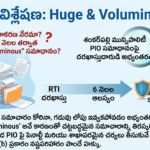
The RTI applicant has raised an objection to the Shankarpally Municipality Public Information Officer (PIO) providing a response nearly six months after the RTI application, stating that the information was “Huge & Voluminous,” instead of furnishing the requested information within the prescribed time.
The applicant, Ganji Srinivasa Rao, sought specific information relating to the parking system under various provisions of the Telangana Municipalities Act, 2019, through RTI Application No. 71/2026 addressed to the Public Information Officer, Shankarpally Municipality.
Information Sought in the RTI Application
The applicant primarily sought the following information ward-wise, year-wise and in the form of certified copies:
1. Section 52(13) – Public Parking Development
- Details of public parking spaces developed in each ward;
- Administrative sanctions, work orders, layout plans and completion certificates.
2. Section 82(2)(ii) – Regulation of Parking
- Notifications/resolutions relating to parking areas allotted for different categories of vehicles;
- Parking zones and time restrictions;
- Ward-wise and year-wise parking fee collections.
3. Section 141 – Acquisition for Public Parking
- Details of land acquired for public parking;
- Acquisition proceedings and title documents;
- Details of related parking collections.
4. Section 172(2) & (10) – Common Parking Areas
- Details of spaces earmarked for common parking in approved layouts;
- Gift deeds transferred to the Municipality;
- Municipal registers relating to common parking spaces.
5. Section 176(6) & (7) – Mandatory Parking
- Details of mandatory parking requirements in building permissions;
- Approved building plans;
- Details of EV charging infrastructure, wherever applicable.
6. Action Against Buildings Constructed Without Parking
- Ward-wise and year-wise details;
- Show-cause notices;
- Demolition/sealing orders;
- Penalty proceedings;
- Penalties imposed and collected;
- Status of cases as regularised, pending, under litigation or demolished.
7. Section 180(2) – Parking Violations
- Cases where spaces earmarked for parking were converted to or misused for other purposes;
- Penalty proceedings/orders;
- Details of penalties collected.
Key Legal Objections to the PIO’s Reply
According to the applicant, although the RTI application clearly specified what information was required, the relevant period, the area concerned and the form in which the records were sought, describing the information merely as “Huge & Voluminous” appears to be an attempt to avoid furnishing the complete information.
Under Section 7(1) of the RTI Act, 2005, the PIO is required to provide the requested information within the prescribed time or communicate a lawful reason for rejection.
According to the applicant, if the information is furnished after the prescribed time limit, the applicability of Section 7(6) also needs to be examined.
Article 19(1)(a) & Section 3
The applicant stated that the right to information is connected with the freedom of speech and expression guaranteed under Article 19(1)(a) of the Constitution of India.
Further, Section 3 of the RTI Act, 2005 provides the right to information to all citizens of India, subject to the provisions of the Act.
Section 20 – Can Action Be Taken Against the PIO?
In his First Appeal, the applicant sought imposition of a penalty under Section 20(1) at the rate of ₹250 per day, subject to a maximum of ₹25,000.
He also sought initiation of disciplinary proceedings under Section 20(2).
However, under these provisions, the concerned Information Commission and First Appellate Authority have statutory roles in matters relating to penalty and disciplinary recommendations against a PIO. A penalty is not imposed automatically merely because there was a delay. The authorities must also examine whether the PIO had a legally sustainable and reasonable justification for the delay or denial.
Section 19(8)(b) – Applicant Seeks Compensation
Claiming that he suffered loss due to non-furnishing or delayed furnishing of information, the applicant sought ₹5,000 as compensation under Section 19(8)(b).
The issue of compensation would also have to be decided by the concerned First Appellate Authority / Information Commission, within the powers conferred upon them under the law.
Can Information Be Denied by Calling It “Voluminous”?
This has emerged as the principal legal question in the matter.
On one hand, citizens have the right under the RTI Act to seek information already available in government records.
On the other hand, where the volume of information is substantial, the issue may potentially be addressed through inspection of records, identification of specific portions of the records, or other legally permissible methods.
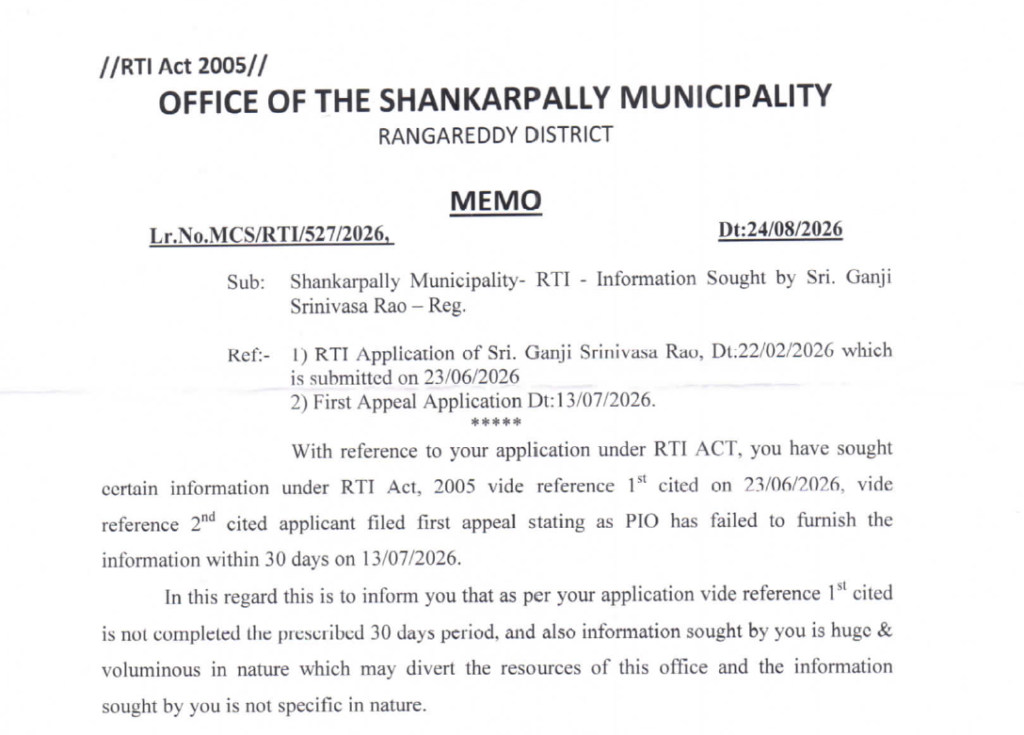
Therefore, the key question for consideration by the appellate authorities is:
Is merely describing the information as “Huge & Voluminous” sufficient, or is the PIO required to provide lawful, point-wise information in respect of each item specifically sought by the applicant?
NOTE: Seeking Model RTI application please send me request to our email: gsrao@way2rti.com