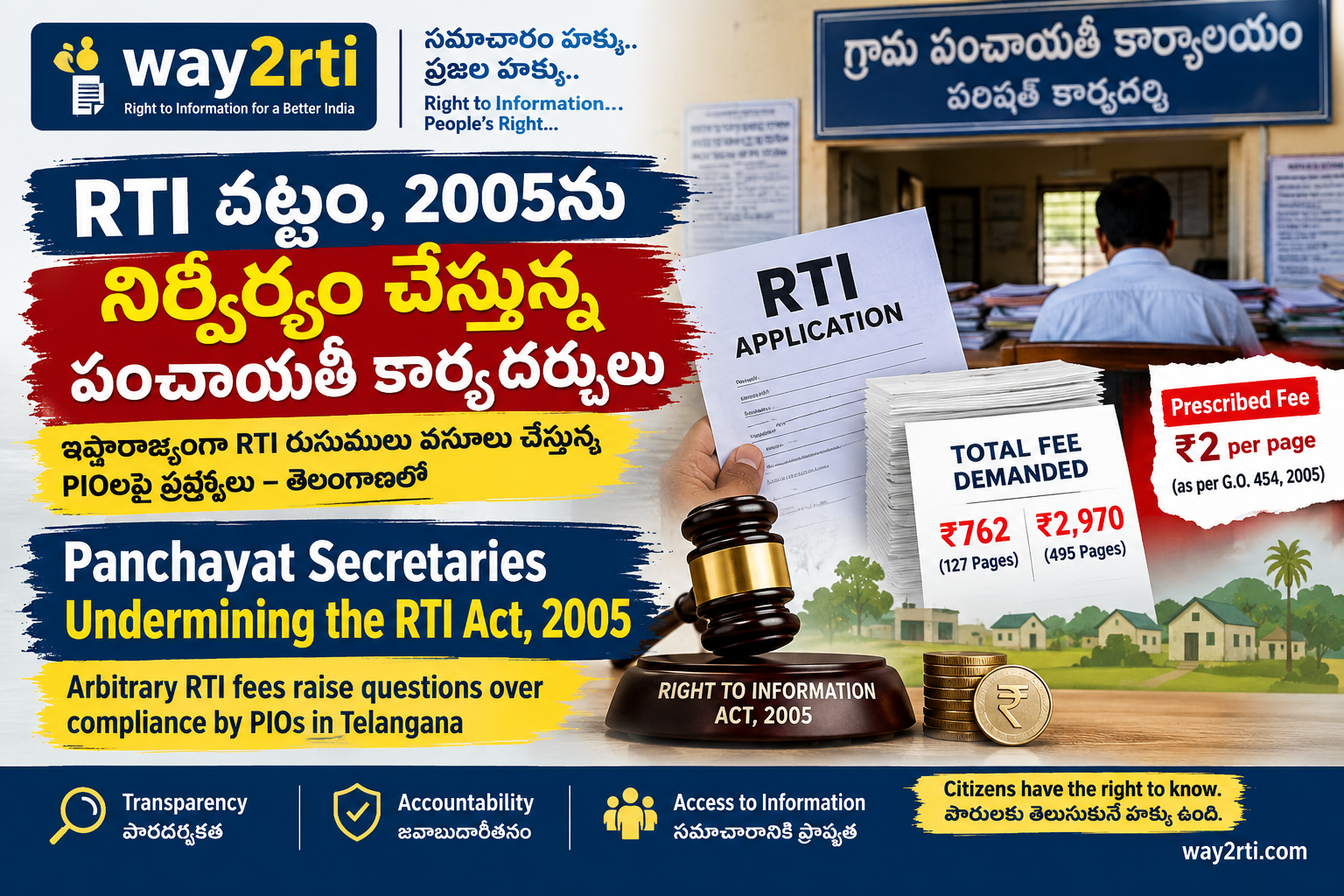
Arbitrary RTI fees raise questions over compliance by PIOs in Telangana
“Ignorance of the law is no excuse” — a principle repeatedly recognised by the Supreme Court of India.
Every public servant is expected to know and follow the laws, rules, regulations and procedures applicable to their official duties and responsibilities. Against this background, instances where Public Information Officers (PIOs) allegedly prescribe fees contrary to the applicable Right to Information (RTI) rules raise serious concerns about transparency, accountability and implementation of the RTI Act, 2005 in Telangana.
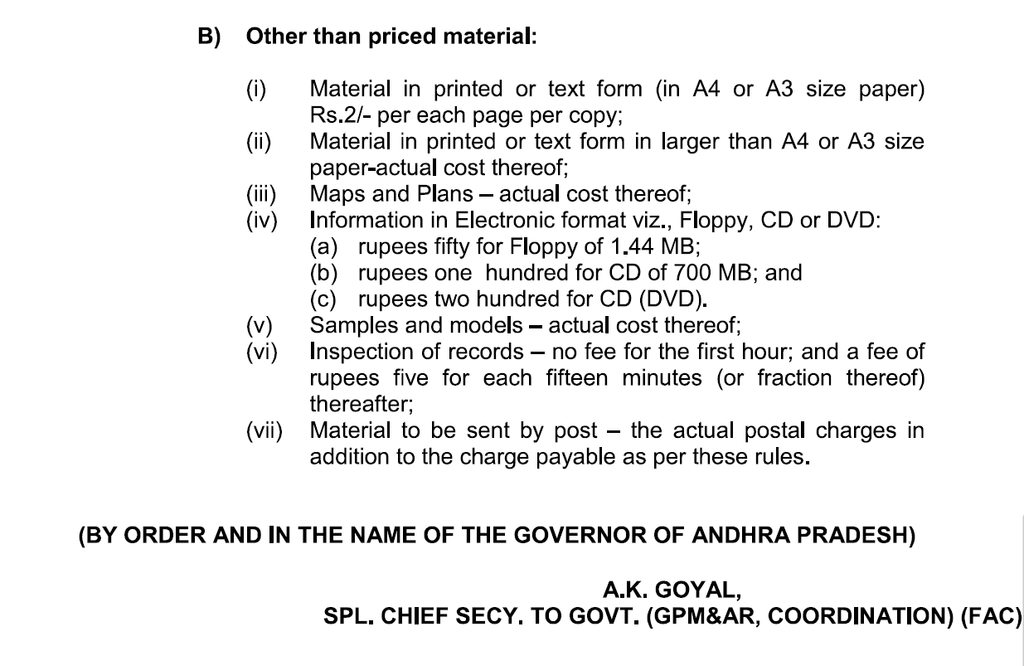
The Right to Information Act, 2005 came into force in October 2005. The Telangana Government had also issued G.O. No. 454 in 2005, prescribing the applicable fee for providing information under the RTI framework, including the cost of copies.
Even after nearly 21 years of implementation of the RTI Act, questions continue to arise over whether some public authorities are properly following the prescribed fee structure while supplying information to citizens.
Anajpur Gram Panchayat: ₹762 demanded
Ganji Srinivasa Rao filed an RTI application seeking copies of the Tax Demand Register records of Anajpur Gram Panchayat, Abdullapurmet Mandal, Rangareddy District, for the financial years:
- 2023–24
- 2024–25
- 2025–26
After receiving the application, the Public Information Officer and Panchayat Secretary informed him that the requested information comprised 127 pages.
The applicant was subsequently asked to pay a total of ₹762, comprising ₹381 towards the cost of copies and another ₹381 described as office copying charges.
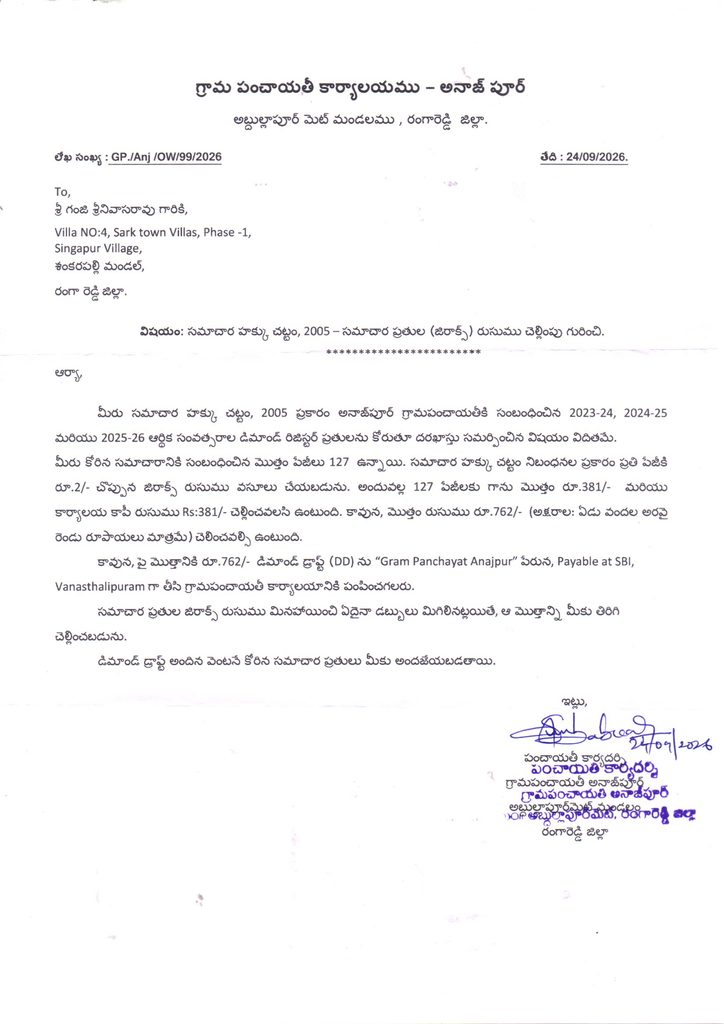
The demand raises a basic question: Under which provision of the applicable RTI rules can an additional amount be collected over and above the prescribed copying fee?
Kondakal Gram Panchayat: ₹2,970 demanded
Ganji Srinivasa Rao subsequently sought similar information from Kondakal Gram Panchayat, Shankarpally Mandal, Rangareddy District, covering the Tax Demand Register records for the same three financial years:
- 2023–24
- 2024–25
- 2025–26
The PIO and Panchayat Secretary of Kondakal Gram Panchayat informed him that the information comprised 495 pages.
However, instead of applying the prescribed rate of ₹2 per page, the applicant was asked to pay ₹2,970, calculated at ₹6 per page.
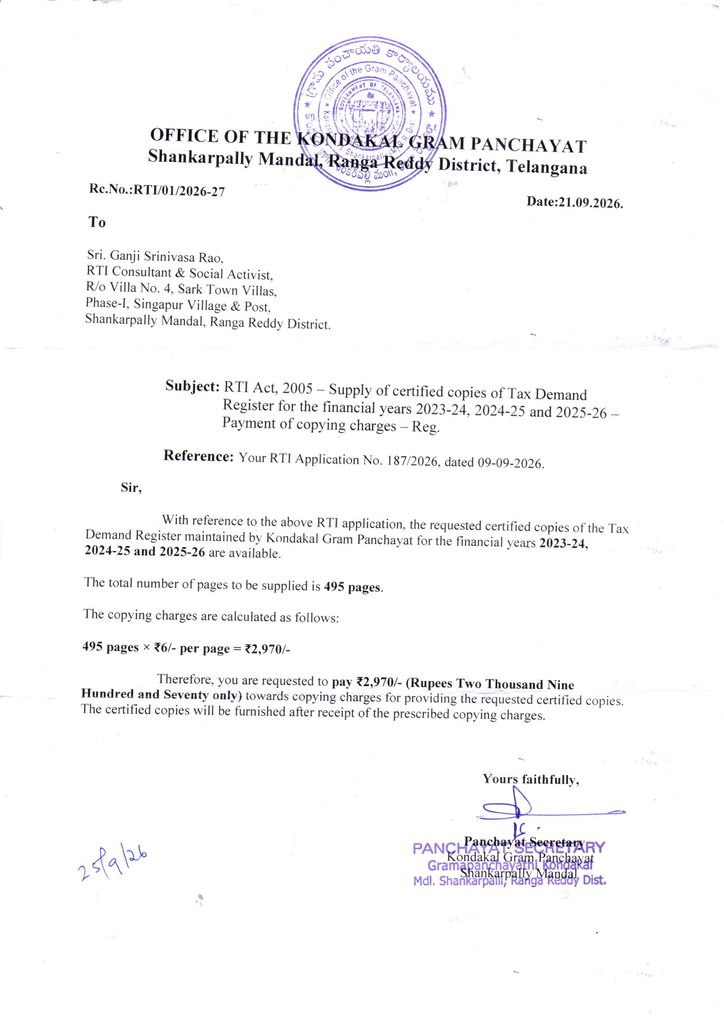
This raises another important question: What is the legal authority for a PIO to demand ₹6 per page when the applicable RTI fee rules prescribe a different rate?
Are RTI provisions being followed?
The two instances raise concerns about the manner in which RTI applications are being processed at the Gram Panchayat level.
If a PIO is required to collect only the fee prescribed under the applicable RTI rules, any additional or different charge should have a clear statutory or regulatory basis. Citizens seeking information under the RTI Act should not be subjected to arbitrary financial demands.
The responsibility of a PIO is not merely to receive an RTI application and issue a reply. The PIO is also expected to understand and comply with the provisions of the RTI Act, 2005 and the applicable rules, including provisions relating to fees, timelines and supply of information.
Role of the State Information Commission
The issue assumes greater significance because appeals and complaints relating to public authorities, including matters concerning the Panchayat Raj Department, are being dealt with by the Telangana State Information Commission.
Despite the State Information Commission conducting hearings in RTI matters, instances of alleged non-compliance or incorrect application of RTI provisions by PIOs continue to raise concerns among applicants.
The purpose of the RTI Act is to promote transparency, accountability and access to information held by public authorities. If citizens are required to pay fees that are not authorised under the applicable rules, the very purpose and spirit of the legislation may be undermined.
Accountability is essential
Public servants are expected to be familiar with the rules governing their official responsibilities. A lack of awareness of the applicable law cannot become a reason for citizens being denied information or being asked to pay unauthorised charges.
The issue therefore warrants examination by the competent authorities:
Are PIOs and Panchayat Secretaries in Telangana correctly following the RTI Act and the applicable fee rules?
If not, who is responsible for ensuring compliance and accountability?
As the traditional saying goes, “As the king, so the subjects.” The manner in which officials at the grassroots level implement the RTI Act ultimately reflects the effectiveness of the supervisory and appellate mechanisms responsible for enforcing the law.
The RTI Act was enacted to empower citizens. Arbitrary fees, procedural hurdles and incorrect application of the rules should not become barriers to exercising a statutory right to information.
Citizens have the right to know. Public authorities have the responsibility to provide information in accordance with law.
feedback: gsrao@way2rti.com